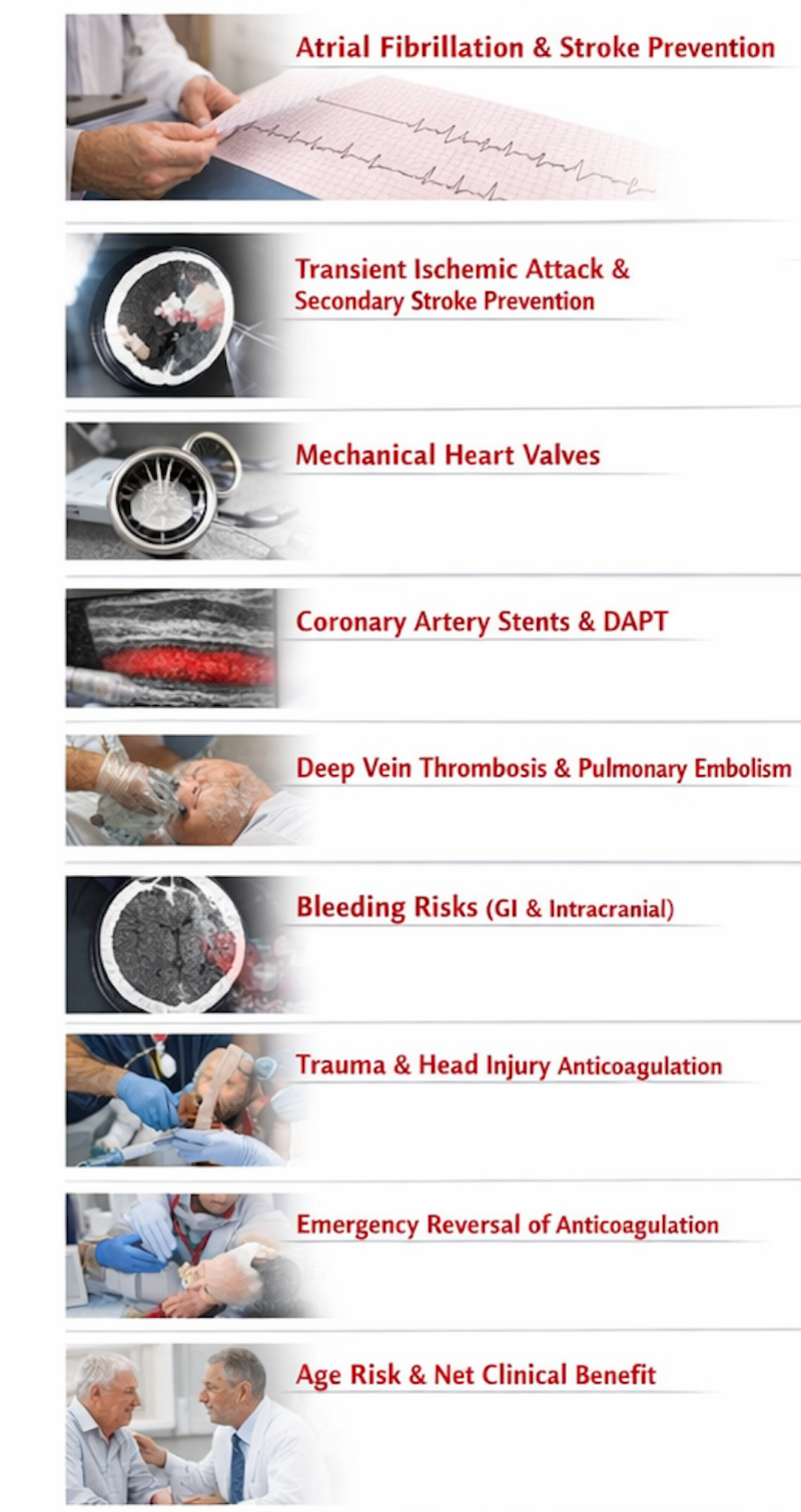
Bleeding risks: what to watch for
The goal is not to scare you — it’s to help you recognize when “wait and see” is unsafe.
High‑risk bleeding scenarios
- Head injury (even “minor”): risk of intracranial hemorrhage and delayed bleeding.
- GI bleeding: black/tarry stool, blood in stool, vomiting blood, severe dizziness.
- Major bruising or expanding hematoma: especially after a fall or blunt impact.
- Post‑procedure bleeding: dental work, surgery, invasive tests.
Early warning signs that should trigger urgent assessment
- New severe headache, confusion, slurred speech, weakness, unequal pupils
- Fainting, chest pain, shortness of breath, pallor, clammy skin
- Vomiting blood, black stools, rapid heart rate, unexplained severe abdominal pain
- Bleeding that won’t stop with firm pressure
What hospitals may do (high level)
- Assess vitals and risk, draw labs, and image when indicated (e.g., CT for head trauma).
- Consider reversal strategies depending on the drug, time since last dose, and severity.
- Provide transfusion support if needed (blood products), and consult surgery/interventional teams.
Key point: the sooner staff know you’re anticoagulated/antiplatelet‑treated, the sooner the right pathway starts.
Emergency rule of thumb: if there is potential for internal bleeding (especially head injury), get urgent assessment and disclose your blood thinner immediately.